Expert insights, actionable strategies, and proven solutions to grow your business.
At its Advertising Week presentation in New York, Meta announced a broad set of updates that push artificial intelligence deeper into how ads are planned, created, managed and even converted into sales. Taken together, the announcements suggest a shift: AI is moving from a helpful add-on inside Meta’s ad tools to the layer that sits between brands and their campaigns.
A business assistant that remembers
The most significant change may be to Meta’s AI-powered business assistant, which offers conversational guidance on building ads. According to Social Media Today, Meta is giving it new creative insights along with more memory and context, so its recommendations can draw on what an advertiser tried last quarter, their seasonality and their stated goals.
Meta is also testing an import feature that would let brands upload their strategy documents and brand voice guidelines, helping the assistant produce outputs that sound like the business rather than generic AI copy.
The assistant is also becoming more agentic. Through simple conversational prompts, it will be able to generate creative elements, update targeting and change an ad’s budget. Meta is additionally testing scheduled tasks such as recurring performance reports and alerts, so advertisers are warned about potential problems without having to check dashboards constantly.
What it means for brands: Campaign management could become less about navigating menus and more about giving instructions. Smaller teams, in particular, may be able to run work that once needed specialist media buyers. The trade-off is that advertisers will need to review what an AI agent changes on their behalf, especially when budgets are involved.
Creative tools open up to more advertisers
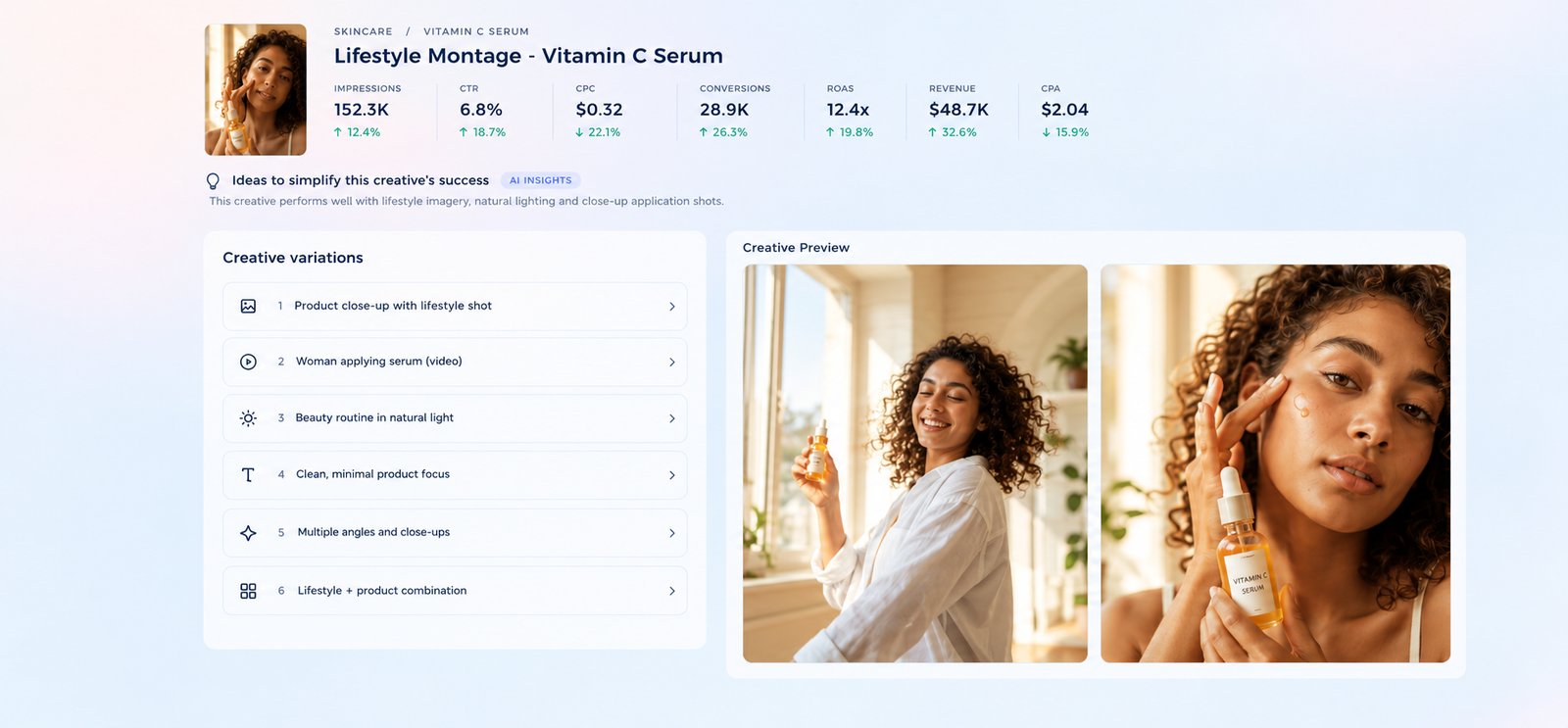
Meta is widening access to its Ads Creative Studio, which launched earlier this year and uses performance data and audience insights to show what is working in campaigns, then offers AI guidance on acting on it. Until now it was available only to selected ad partners; Meta is now expanding it to more brands.
Video is a major focus. In Advantage+ creative, advertisers and agencies can now generate video from existing static assets, a feature that is generally available. Inside Ads Creative Studio, marketers can produce new video concepts and variations, then edit hooks, audio, clip length, text overlays, captions and end scenes. Meta is also simplifying video generation from catalog listings and adding related-product recommendations to encourage upselling.
What it means for brands: Video has long been expensive and slow to produce. If static images and product catalogs can be turned into video variations quickly, brands can test many more creative ideas, and creative volume may become less of a competitive advantage than creative judgment.
Strategy and third-party AI access
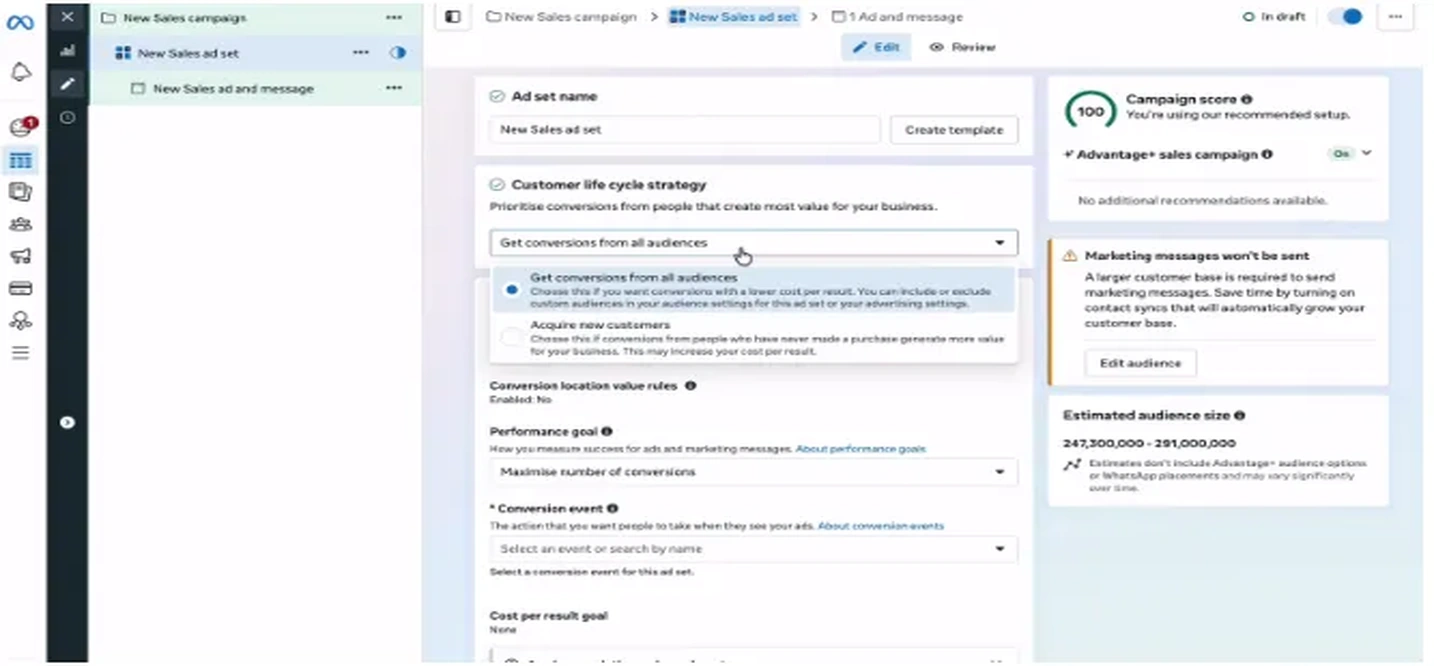
Meta is making its Customer Lifecycle Strategy available to all advertisers. It lets marketers define the audience for each campaign so that every recommendation and change aligns with a top-level objective. Meta also expanded its Ads MCP server, which allows advertisers to use third-party AI tools to build and manage campaigns.
What it means for brands: Advertisers will not be locked into Meta’s own interface. Agencies and platforms that already use their own AI systems may be able to plug directly into Meta’s ad infrastructure.
Shopping inside the AI conversation
Perhaps the most forward-looking announcement concerns commerce. Meta says people increasingly discover and decide on products inside Meta AI, Muse and Meta Business Agent, where they ask questions, compare options and choose what to buy. To meet that behavior, Meta is building partnerships with retailers so purchases can be completed without leaving the conversation.
One example is a direct checkout experience with Shopify through Meta Business Agent on Messenger, allowing Shopify products to be bought in-stream. Meta is also testing similar checkout options in Meta AI with Adyen, PayPal, Shopify and Stripe. Social Media Today noted that, with Muse gaining traction among users, this could become a valuable consideration for brands.
What it means for brands: The path from discovery to purchase may shrink to a single chat. That creates new opportunities, but it also raises questions about how products are surfaced and compared inside AI responses, and how much brand control advertisers retain.
The bigger picture
Three themes run through the announcements:
- Automation of routine work: reporting, budget changes, targeting updates and creative variations increasingly happen through conversation.
- Creative at scale: AI video tools lower the cost of producing and testing content.
- Commerce in the conversation: AI assistants are becoming storefronts, not just search tools.
For marketers, the practical advice is to treat these tools as accelerators rather than replacements. Brand guidelines, clear goals and human review will matter more as more decisions are delegated to AI. Many of the features, such as importing brand guidelines and scheduled tasks, are still in testing, so early adopters should pilot them on limited budgets before relying on them.
Meta’s message at Advertising Week was clear: it wants AI to be at the center of how brands plan, create and sell. How much advertisers gain will depend on how thoughtfully they use it.
Source
Hutchinson, Andrew. “Meta introduces new AI-powered tools at Advertising Week.” Social Media Today, October 6, 2026.