Great characters don’t happen by accident. They are designed with purpose.
Think of the characters players remember years later. Their silhouettes, colors, and personalities are instantly recognizable, and none of it is luck. Every memorable character comes from a clear process that connects story, gameplay, and visual design.
At our studio, we follow a proven pipeline that takes an idea from first sketch to a game-ready 3D model. Here is how it works, so you know what to expect when you build your next character.
Who is this character and why do they exist?
Before any drawing begins, we define the character’s role in your game. A hero, a villain, a sidekick, and an NPC merchant all need different levels of detail, personality, and visual weight. We gather the essentials: the game’s genre, target audience, art style, platform, and the character’s backstory.
A strong brief keeps the whole project focused and prevents costly revisions later. The key questions to answer are:
- What is the character’s role in the story and gameplay?
- Who is the target audience, and what do they respond to?
- What art style does the game use (realistic, stylized, cartoon, pixel)?
- What are the technical limits of the platform (mobile, console, PC)?
Finding the shape of your character
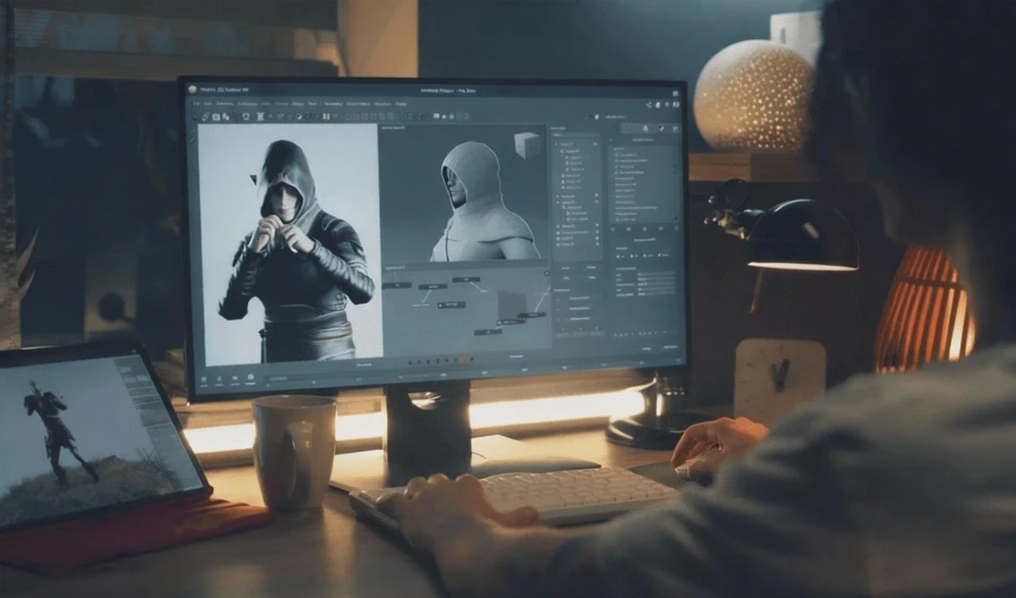
This is where the character first takes form. Artists explore many rough sketches and silhouettes before choosing a direction. The silhouette test is one of the most important steps: if you can recognize a character from a solid black shape alone, the design is strong.
We also develop shape language, color palette, and costume details at this stage. Round shapes feel friendly and safe, sharp angles suggest danger, and squares suggest strength and stability. Color tells players who a character is before they say a word.
Once a direction is approved, we produce a full concept sheet showing:
- Front, side, and back views of the character
- Facial expressions and signature poses
- Color palette and material notes
- Costume variations, props, and weapons
3D modeling: bringing the concept to life
With the concept approved, our 3D artists build the character. The process starts with a high-poly sculpt in tools like ZBrush for fine details such as muscles, fabric folds, and scars. We then create a clean, low-poly version through retopology so the model runs smoothly inside the game engine.
Good topology matters more than many people realize. Clean edge flow helps the character deform naturally during animation and keeps performance high, especially on mobile and VR.
Texturing and materials: adding personality
Texturing turns a gray model into a living character. Using tools like Substance Painter, we add skin detail, worn leather, scratched metal, and glowing effects. The goal is to match the game’s visual style while telling a story through surface detail. A scar, a patched jacket, or a faded emblem can say more about a character than a page of dialogue.
Rigging and animation: making the character move
A beautiful model is only useful if it can move well. Rigging builds the digital skeleton and controls that animators use to bring the character to life. A well-built rig supports:
✔ Smooth, natural movement in walk, run, and combat cycles
✔ Expressive facial animation for dialogue and emotion
✔ Compatibility with Unity and Unreal Engine
✔ Easy customization for outfits and gear
Optimization and delivery: game-ready from day one
The final step is making sure the character performs well in your game. We optimize polygon counts, create level-of-detail (LOD) versions, and set efficient texture sizes. Then we test the character inside your engine and deliver clean, organized files your team can use right away.
Final thoughts
A memorable game character combines story, strong design, technical skill, and attention to detail. When each stage of the pipeline is done well, the result is a character players connect with, remember, and talk about.
Ready to create your next unforgettable character? Book a free consultation with our team or browse our portfolio to see our work.